
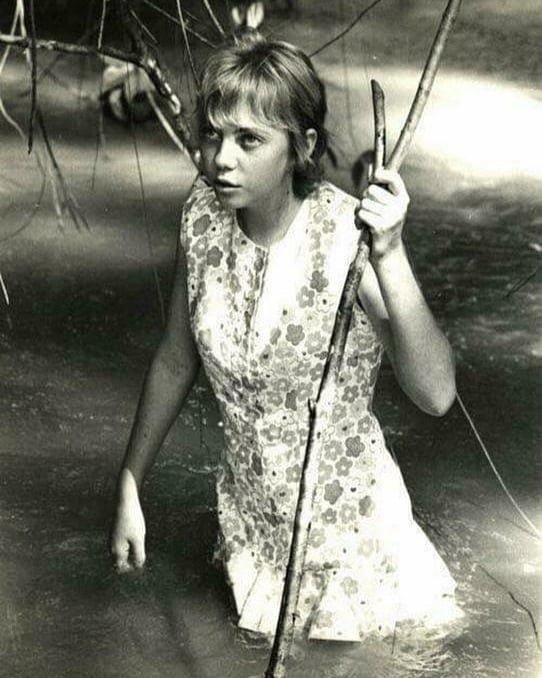
Juliane Koepcke was born in 1954 in Peru. Her parents were German scientists who worked in the Amazon rainforest, so Juliane grew up surrounded by jungle and wildlife. From a young age, she learned basic survival skills such as observing nature, staying calm, and respecting the forest—knowledge that would later save her life.
On December 24, 1971, 17-year-old Juliane and her mother, Maria Koepcke, boarded LANSA Flight 508 in Lima, Peru. They were traveling to the Amazon city of Pucallpa to spend Christmas with Juliane’s father. The plane carried 93 people.
During the flight, the plane flew into a severe thunderstorm. While flying through thick clouds, the aircraft was struck by lightning, which caused it to break apart in midair at about 10,000 feet (around 2 miles high).
Juliane was thrown out of the plane, still strapped to her seat. She fell through the air unconscious. Miraculously, the seat and the dense rainforest canopy slowed her fall. When she woke up, she was lying on the jungle floor with a broken collarbone, a deep cut on her arm, eye injuries, and several bruises. Her glasses were gone, and she was alone. Her mother did not survive the crash.
Despite being injured and traumatized, Juliane remembered her father’s advice:
“If you ever get lost in the jungle, follow water. Streams lead to rivers, and rivers lead to people.”
With no food and only a few candies she found nearby, Juliane began walking along a small stream. She suffered from pain, insect bites, hunger, and exhaustion. After a few days, her wounds became infected, and maggots began to infest the open cut on her arm.
On the tenth day, Juliane found a small shelter used by local fishermen and a boat with some gasoline left in its tank. Remembering that fuel could kill parasites, she poured the gasoline onto her wound. The pain was extreme, but it killed the maggots, likely saving her life from severe infection.
The next day, local fishermen returned to the shelter. At first, they were shocked, believing Juliane might be a jungle spirit. When they realized she was human, they helped her and took her by boat to a village, where she received medical care.
Out of all 93 people on LANSA Flight 508, Juliane Koepcke was the only survivor.
Later in life, Juliane returned to Germany, studied biology like her parents, and eventually became a zoologist. She later revisited the crash site and shared her story in books and documentaries, emphasizing survival, resilience, and the power of staying calm in impossible situations.
Her survival is considered one of the most extraordinary survival stories in aviation history.

0 Comments