
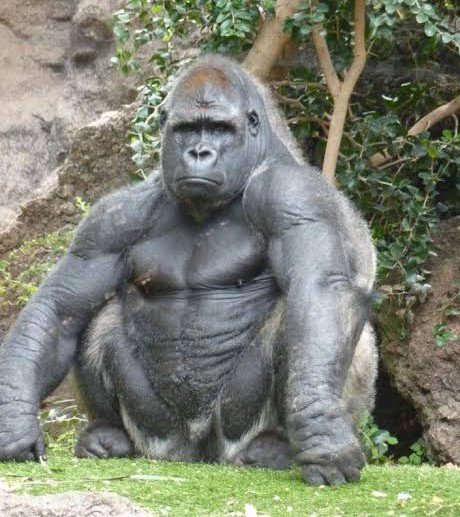
A gorilla can support a load of 800 kg, a human can support perhaps a maximum of 500 kg before the nose bleeds from the effort, and they also weigh around 240 kg. There is no comparison, the man loses to the gorilla’s strength.
They eat about 20 kg of food per day; 60% is fruit, 17% leaves and the rest are seeds, stems, caterpillars, termites and ants (mountain gorillas eat more leaves and stems due to the lack of fruit in their mountainous habitat in the Virunga).
The difference is in their body, belly and metabolism, gorillas, chimpanzees and orangutans have almost no body fat and their muscles are very visible, they are pot-bellied because their digestive system is highly developed with a very large stomach and very long intestines so that they can ferment food well.
They absorb nutrients very well, including proteins from their diet (green plants also have them). Walking on their hands all the time also makes them strong and broad-chested; they have made the gorilla a primate with very large muscular mass for so long, chimpanzees do even more activities than the average person, running all day, climbing trees and fighting, in fact, like many wild animals that also tend to have highly developed muscular masses, although they are herbivores (horses, antelopes, rhinos, elephants).
What gorillas need to do is eat large amounts of plant matter, every day and constantly: the bacteria in their stomachs can break down the plant cellulose that we cannot, and the byproducts produced by the bacteria are rich in proteins that are absorbed by the gorilla’s body.

0 Comments