
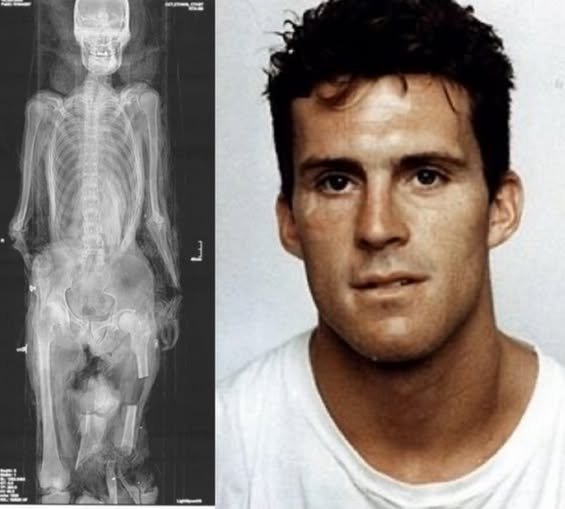
Duncan MacPherson was a Canadian hockey player who disappeared in Austria in 1989 under mysterious circumstances. At the time, he was 23 years old and on his way to begin a new chapter in his career as a player-coach for the Dundee Rockets hockey team in Scotland.
In early August 1989, MacPherson traveled through Europe and stopped in Austria to visit the Stubai Glacier ski resort near Innsbruck. On August 9, 1989, he was last seen at the resort. He had borrowed a car and was expected to continue his journey to Dundee, Scotland, where he was due to arrive on August 12. When he never showed up and failed to make contact, his family and friends became alarmed and reported him missing.
A search was launched, but it produced no immediate results. Six weeks later, the borrowed car was found parked in the Stubai Glacier resort’s parking lot. There were no signs of struggle, no personal belongings nearby, and no indication of where MacPherson had gone. Despite repeated searches of the surrounding area, there was no trace of him. Over time, the case grew cold and became one of Austria’s most puzzling missing-person mysteries.
For 14 years, nothing more was discovered.
Then, in 2003, melting ice on the Schaufelferner Glacier revealed human remains. The body was identified as Duncan MacPherson. Investigators examined the remains and found injuries consistent with being struck by heavy machinery. Nearby, they also found a broken snowboard, which provided a crucial clue.
Authorities concluded that MacPherson had likely been accidentally run over by a snowcat (a large machine used to groom ski slopes). Poor visibility at the glacier may have prevented the operator from seeing him. After the accident, his body apparently fell or was pushed into a shallow crevasse, where it remained hidden beneath ice and snow for many years. Only when the glacier receded did his remains finally come to light.
There was no evidence of foul play, and the incident was ruled a tragic accident.
MacPherson’s discovery brought long-delayed closure to his family after more than a decade of uncertainty. His story is often cited as a haunting example of how dangerous mountain environments can be—and how nature can conceal the truth for years.

0 Comments