
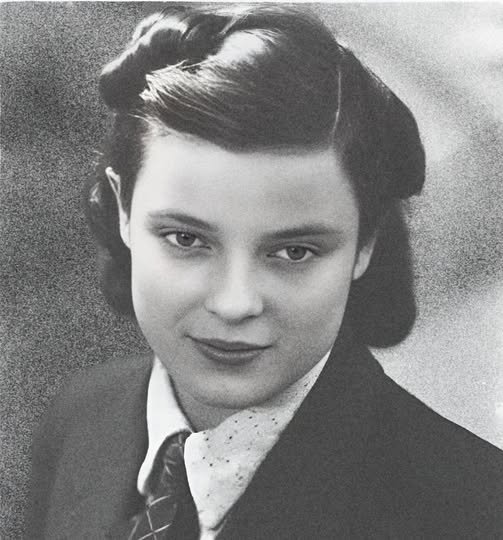
Faye Schulman, a brave resistance fighter during World War II, was born on November 28, 1919, in a small town called Lenin, Poland. She grew up in a big family and learned how to take photos from her brother Moishe. She often helped him with his photography business.
On August 14, 1942, the Nazis killed 1,850 Jewish people in the Lenin ghetto. Among them were Faye’s parents, sisters, and younger brother. Only 26 people were left alive that day, and Faye was one of them—saved because she knew how to take and develop photos. The Nazis forced her to develop their photos of the massacre, but she secretly made copies for herself.
During a raid by resistance fighters, Faye escaped into the forest and joined a group called the Molotava Brigade. This group was made up mostly of former Soviet soldiers who had escaped. Faye was allowed to join because her brother-in-law had been a doctor, and they badly needed anyone with even a little knowledge of medicine. Though she had no training, Faye worked as a nurse from September 1942 to July 1944. The camp’s doctor was actually a vet who usually treated animals.
Later, during another raid, Faye returned to her hometown and managed to get her old camera and equipment. Over the next two years, she took more than 100 photos. She developed the film at night under blankets and made prints during the day using sunlight. When she went on missions, she buried her camera and tripod to keep them safe.
Her photos showed a rare look at life in the resistance. In one picture, Jewish and Russian fighters are buried side by side, even though there was strong antisemitism in the group. In another, Faye and three young Jewish men are smiling in a happy reunion—they each thought the others had died.
Faye wanted the world to know that Jews did fight back. “We didn’t go like sheep to the slaughter,” she said. “I was a photographer. I have pictures. I have proof.” She was one of the few Jewish photographers who documented the resistance.
After the war, Faye married Morris Schulman. They were both honored as Soviet war heroes but didn’t want to stay in Pinsk, Poland, because it reminded them too much of the past. They lived in a displaced persons camp in Germany for three years before moving to Canada in 1948.
Faye spent the rest of her life in Toronto, Canada. She often shared her story with many different groups of people. She had two children and six grandchildren. Faye passed away on April 24, 2021, at the age of 101, surrounded by her family.

0 Comments