
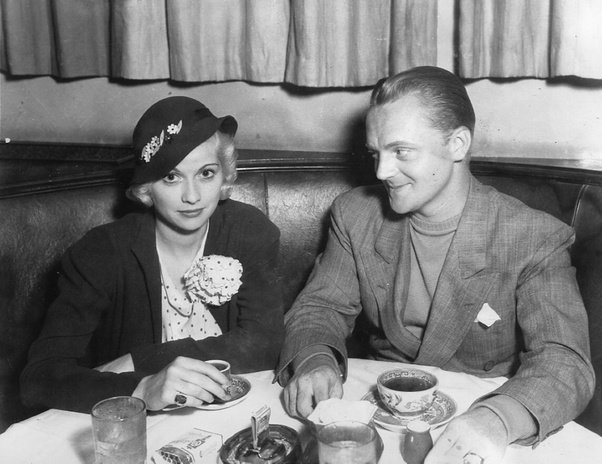
In the early 1930s, Hollywood was drawing young people from all over America who dreamed of fame. Among them were William Cagney and Lucille Ball, whose lives would become connected to Hollywood history—though in very different ways.
William Cagney and His Famous Brother
William Cagney came to Hollywood with his younger brother James Cagney. William actually hoped to become an actor himself, but it soon became clear that acting was not where he would shine. His brother James, however, had incredible screen presence. They looked so much alike that people often mistook them for twins, but James had the spark that studios wanted.
Instead of competing with his brother, William made a smart decision: he became James Cagney’s business manager and protector. At a time when studios had almost total control over actors, William fought hard for James’s rights.
One of William’s most famous achievements was negotiating James’s contract with Jack Warner, the powerful head of Warner Bros. William added an unusual condition that later became known as the “happiness clause.” This clause stated that if James Cagney was unhappy with the roles or working conditions, he did not have to work. In the 1930s, this was almost unheard of. Studios rarely gave actors any freedom at all.
William later went on to become a film producer, and he helped produce some of James Cagney’s most important movies, including the patriotic classic Yankee Doodle Dandy (1942), which won James an Academy Award.
Though William never became famous on screen, he was highly respected behind the scenes and played a crucial role in protecting his brother’s career and independence.
Lucille Ball’s Rise to Stardom
Around the same time, Lucille Ball arrived in Hollywood on her own, full of ambition. In 1932, she was hired as a Goldwyn Girl, one of many beautiful young women who appeared in musical numbers for MGM. At first, she struggled. For years, she played small, forgettable roles and was often told she would never be a star.
Lucille reinvented herself, even dying her hair red, which made her stand out. She slowly built a reputation as a gifted comedian with incredible timing. Still, movie stardom remained out of reach.
Everything changed with the arrival of television, which was still new and experimental. Lucille took a huge risk by moving from films to TV—something many movie actors considered a step down. In 1951, she starred in I Love Lucy, alongside her real-life husband Desi Arnaz (whom she married in 1940).
The show became a massive success and changed television forever. Lucille Ball became one of the most famous entertainers in the world, and later the first woman to run a major Hollywood studio, Desilu Productions. She helped launch shows like Star Trek and Mission: Impossible.
A Hollywood Legacy
William Cagney and Lucille Ball never shared the same kind of fame, but both helped shape Hollywood in lasting ways:
- William Cagney proved that power behind the scenes could be just as important as fame on screen.
- Lucille Ball became a legend who redefined comedy, television, and women’s roles in entertainment.
Their stories show that Hollywood success doesn’t follow just one path—and sometimes, the people who change history aren’t the ones who first arrive with the biggest spotlight.

0 Comments