
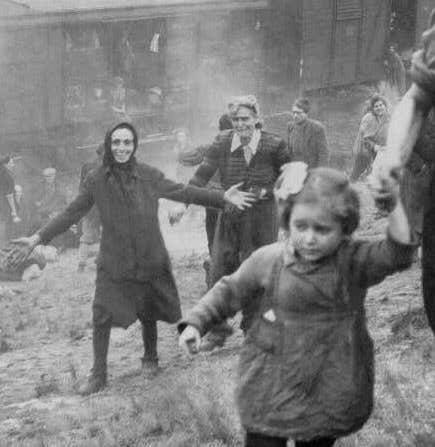
On April 13, 1945, in the final days of World War II, a train carrying about 2,500 Jewish prisoners was moving through Farsleben, Germany, near the city of Magdeburg. The prisoners were survivors of Nazi concentration camps and ghettos. They had already suffered extreme hunger, disease, and abuse.
The Nazis had packed them into freight cars, about 70 people per car, with almost no food, water, or space. Many prisoners were so weak they could barely stand. The train’s destination was Theresienstadt, a ghetto and concentration camp in what is now the Czech Republic. For many prisoners, reaching another camp would likely have meant death.
As the war was collapsing for Nazi Germany, the situation became chaotic. German guards began abandoning their posts. When the train stopped near Farsleben, U.S. Army soldiers from the 30th Infantry Division discovered it during their advance.
When the American soldiers opened the train cars, they found thousands of exhausted, terrified people inside. The soldiers immediately realized these were Holocaust prisoners and freed all 2,500 people on the train.
One American soldier, Sergeant George C. Gross, later described the moment. He said that when the prisoners saw the Americans, they began laughing and crying at the same time—not because they were suddenly happy, but because of an overwhelming sense of relief after years of suffering. Many could barely speak or move, but they understood they were finally safe.
The U.S. soldiers gave the prisoners food, medical care, and protection. Local buildings were used to shelter them, and doctors treated the sick and injured. For many of the survivors, this rescue meant the difference between life and death.
The Farsleben train rescue is remembered today as one of the many powerful moments when Allied forces uncovered the reality of the Holocaust and saved those who had endured unimaginable cruelty. It stands as a reminder of both the horrors of the Holocaust and the importance of compassion and courage in the face of injustice.

0 Comments