
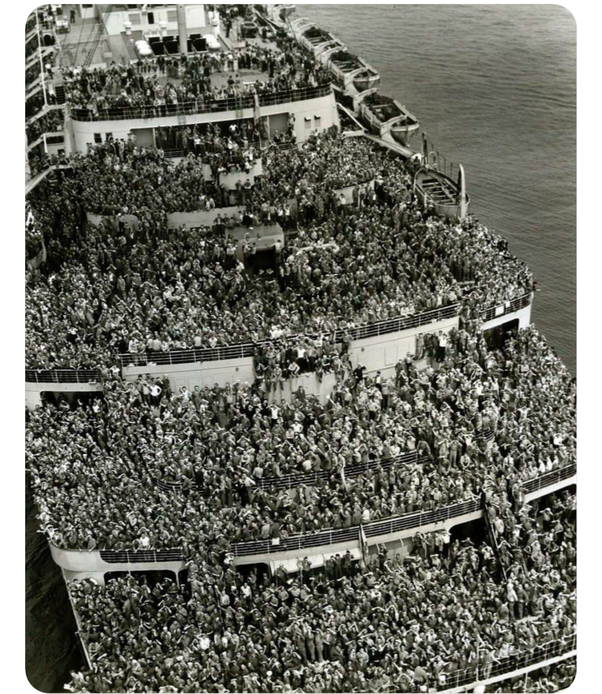
A troopship was carrying soldiers home from Europe. General Eisenhower came up with the idea of hotbunking — that means half the men slept below deck while the other half stayed topside. Even though it was crowded, the soldiers liked this because it let twice as many men travel home at once.
Most soldiers were sent home as fast as possible, though it still took some time. Some stayed for occupation duty, including new soldiers who had just joined. The army was made smaller but not as small as before the war.
How fast soldiers went home depended a lot on ships and planes. If they were ready, the trip happened quickly. My father was in the Navy in the Pacific, where there were lots of ships, and I think he got back to New York soon after the war ended.
In the book “Masters of the Air,” Donald Miller says a bomb group in England flew some good-will flights after Germany surrendered. Then one day in August, the air crews just flew back to the U.S., leaving their base empty.
But soldiers on the ground often had to wait many months in camps before going home. They couldn’t just pack men onto Liberty ships anytime; they had to use troopships and ocean liners carefully.
The picture above shows the Queen Elizabeth arriving in New York on June 29, 1945. It carried mostly men from the Eighth Air Force, called “The Mighty Eighth.” These were mainly ground crew, admin staff, security, and maybe gunner sergeants. The officers flew the planes home themselves.
At the end of June, many of these men expected to be trained again and sent to the Pacific. (The Eighth Air Force headquarters moved to Okinawa in July.) But the war ended before that could happen, so their trip was cut short.

0 Comments