
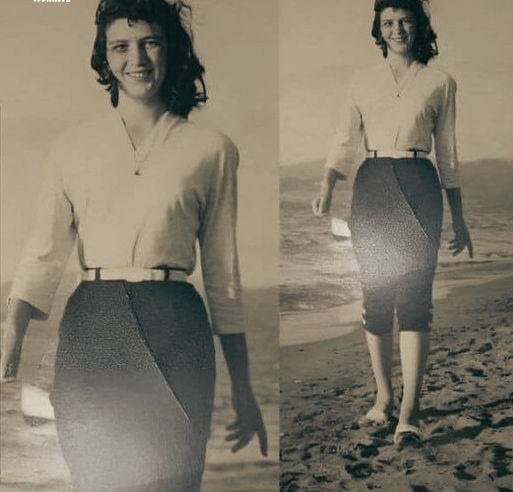
In this photograph, my mother had just turned eighteen. She was about to finish high school at a classical lyceum, an elite school where only eight students made it to graduation—six boys and just two girls. Most of her classmates came from privileged families: their parents were doctors, professors, or lawyers. My mother was the only one whose father was an electrician and whose mother was a homemaker.
My grandparents had completed only elementary school. Every morning, my mother woke up at five o’clock to catch a bus filled with working men so she could travel far from home to attend school. Education was not something that came easily or comfortably to her—it required sacrifice every single day.
In her final year, her paternal grandfather told her it was time to stop studying and start working. A job had been found for her as a secretary—a respectable and well-paid position for a young woman at the time. Although my mother was an outstanding student and deeply wanted to continue learning, there simply wasn’t enough money for her to go on to university.
Then one evening, her father—my grandfather, Lidio—called her aside. He said something that would change her life forever:
“This money was saved for your dowry. Take it and go to university. You can always buy sheets later.”
It was 1960. My grandfather did not even have a middle school education. He had been orphaned at a young age and grew up with very little, yet he was remarkably forward-thinking. He had two daughters, and whenever people said to him, “It’s a shame you didn’t have a son,” he would proudly reply that his daughters were the greatest gift life had given him.
My mother went on to complete her university degree in five years. She studied in the mornings and worked as a tutor in the afternoons to support herself. She became a teacher, dedicating her life to education. After retiring, she began writing books and editing academic theses.
All of this was possible because a working-class father, in 1960, chose to invest in his daughter’s education instead of traditional household goods. My grandfather was a true hero—not because he was wealthy or powerful, but because he believed in his daughter’s potential when it mattered most.

0 Comments