
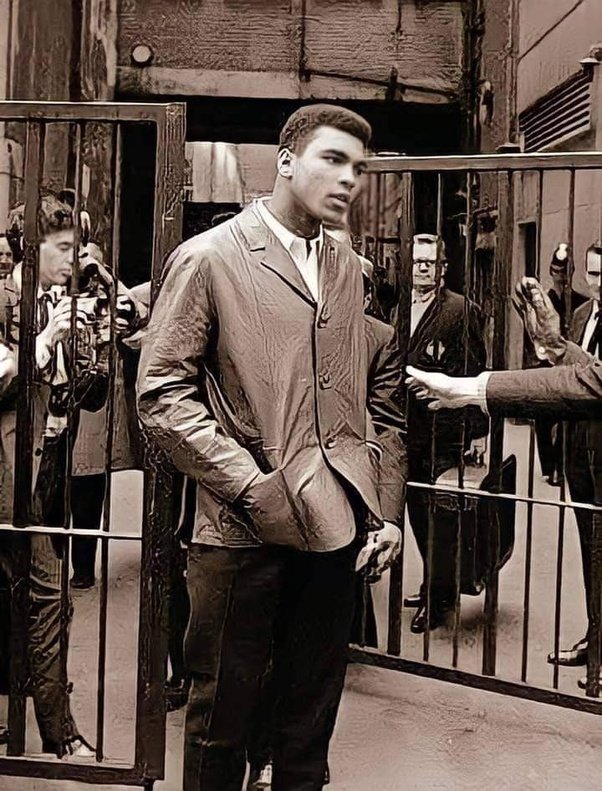
In 1966–1967, Muhammad Ali was not just the world heavyweight boxing champion — he was also one of the most famous Black Americans alive. At the same time, the United States was deeply involved in the Vietnam War, and young men were being drafted to fight.
Ali was ordered to join the U.S. Army.
Why Ali Refused the Draft
Ali refused to be inducted into the military for two main reasons:
Religious belief
Ali had converted to Islam and was a member of the Nation of Islam. He believed his faith did not allow him to fight in a war that was not defensive or just. He applied for conscientious objector status, but the government rejected it.
Moral and racial injustice
Ali believed it was deeply hypocritical to ask Black Americans to fight and die overseas while they were denied basic rights at home. Segregation, police violence, and discrimination were still everyday realities for Black people in the U.S.
This is where the powerful ideas in the quote you shared come from.
Meaning of His Words
When Ali said things like:
“I’m not going to Canada”
→ He meant he would not flee the country to avoid consequences.
“I’ve been in jail for 400 years”
→ This was a metaphor for the history of slavery and systemic oppression of Black people in America.
“I’m not going to kill other poor people”
→ He saw the Vietnam War as poor people being sent to kill other poor people for political reasons.
“You’re my enemy when I want freedom, justice, equality”
→ He was saying that the real struggle he faced was racism and injustice in America, not people in Vietnam or Asia who had never harmed him.
Ali famously said (in another interview, often summarized):
“No Viet Cong ever called me the N-word.”
The Consequences He Faced
Ali knew refusing the draft would cost him everything — and it did:
He was convicted of draft evasion
Sentenced to 5 years in prison (though he remained free while appealing)
Stripped of his boxing title
Banned from boxing for over 3 years, during the prime of his career
Lost millions of dollars and public support
Many Americans hated him at the time. He was called unpatriotic, dangerous, and even a traitor.
What Happened Later
In 1971, the U.S. Supreme Court unanimously overturned his conviction, ruling that the government had unfairly denied his conscientious objector claim.
History completely changed how Ali was seen:
He returned to boxing and regained the heavyweight title
He became a global symbol of courage, conscience, and resistance
Today, his stand against the Vietnam War is widely respected, even by people who disagreed with him then
Important Note About the Quote
The exact wording you shared is not from one single interview. It is a composite — meaning it combines Ali’s words, ideas, and statements from multiple interviews and speeches during the late 1960s.
However, the message is 100% true to what Ali believed and said.

0 Comments