
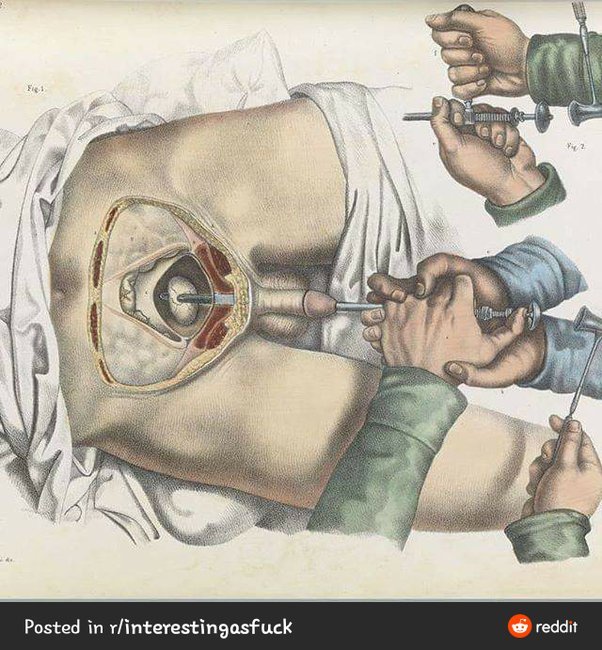
Before modern imaging, anesthesia, and minimally invasive surgery, kidney stones were one of the most feared medical conditions. They have been described since ancient times—by the Egyptians, Greeks, Romans, and later medieval surgeons.
Did doctors really use a nail and hammer?
No.
That part is a myth or an extreme simplification meant to shock.
What did exist was a brutal surgical procedure called lithotomy (from Greek lithos = stone, tomē = cutting).
How Kidney Stones Were Treated Historically
1. Ancient and Medieval Periods
- Doctors knew that stones formed in the bladder or urinary tract.
- There were no X-rays, ultrasounds, or painkillers.
- Diagnosis was based on symptoms: severe pain, blood in urine, inability to urinate.
2. Lithotomy (Stone Removal Surgery)
- The surgeon did NOT go through the urethra with a nail.
- Instead, they made an incision in the perineum (the area between the genitals and anus).
- Special metal instruments (primitive but purpose-made, not nails) were used to:
- Locate the stone
- Either remove it whole or break it into pieces
This was:
- Done without anesthesia (before 1846)
- Extremely painful
- Very risky (infection, bleeding, death)
Many patients did not survive.
Lithotripsy (Stone Crushing) – Later Development
- Some later techniques involved crushing stones inside the bladder using instruments inserted through the urethra.
- These tools were designed medical devices, not nails, and no hammering like carpentry.
- Even so, it was still terrifying and agonizing.
Pain Management Before Anesthesia
Before anesthesia was introduced in 1846, pain relief options were:
- Alcohol
- Opium (when available)
- Physical restraint
- Speed—surgeons were praised for how fast they could operate
Surgeries often lasted minutes, not hours, because pain and shock could kill the patient.
Why the Myth Exists
The “nail and hammer” story survives because:
- Early surgical tools were crude by modern standards
- The procedures were unimaginably painful
- People simplify the horror into shocking imagery
But historically speaking, surgeons did have specialized instruments, and they were trying to help, even with very limited knowledge.
Modern Perspective
Today:
- Most kidney stones pass naturally
- Others are treated with non-invasive shock wave lithotripsy
- Or minimally invasive laser procedures
- With anesthesia, antibiotics, and imaging
Compared to the past, modern treatment is extraordinarily humane.

0 Comments